
In the fast-paced world of Western* B2B sales, the era of the "charismatic closer" is being replaced by the era of the Strategic Orchestrator. To lead a high-performing B2B sales team in today’s complex market, hitting your numbers isn’t enough—you have to build a sustainable, data-driven engine.
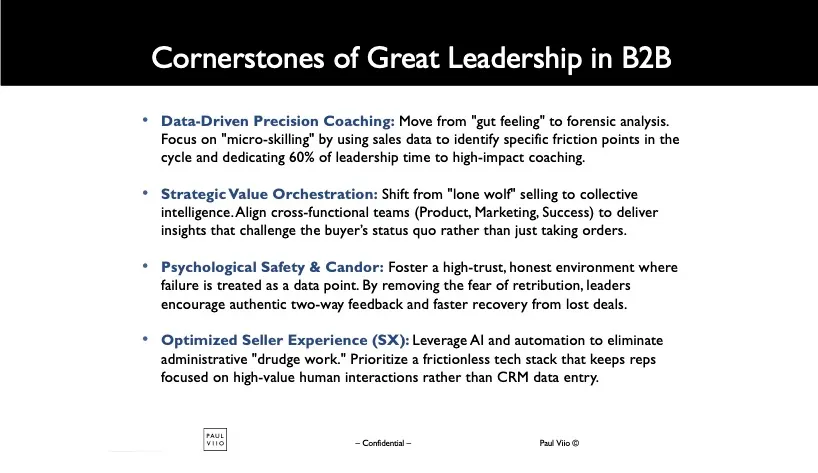
Based on recent organizational research and the habits of top-tier firms, here are four cornerstones of excellent B2B sales leadership:
1. Precision Coaching over "Gut Feeling"
The best leaders have traded broad, anecdotal advice for Data-Driven Coaching. Instead of asking general questions about why a deal is stalled, they use forensic data to identify specific "micro-skill" gaps. Whether it's a weakness in early-stage discovery or a struggle with multi-stakeholder closing, great leaders provide targeted surgical strikes of training rather than generic pep talks.
2. Value-Based Orchestration
Modern B2B buying involves an average of 6 to 10 stakeholders. Because of this complexity, the "lone wolf" salesperson is a liability. Excellence now lies in Collective Intelligence. Great leaders align Sales, Marketing, and Product teams to ensure the rep acts as an "insight provider." The goal is to move beyond being a vendor and become a consultant who challenges the customer's status quo.
3. Radical Candor & Psychological Safety
According to Google’s Project Aristotle, the highest-performing teams share one trait: Psychological Safety. In sales, this means creating an environment where "failure" is treated as data. When leaders practice Radical Candor—challenging their team directly while caring for them personally—they build a culture where reps can admit mistakes, learn from lost deals, and pivot quickly without fear of retribution.
4. Eliminating the "Drudge" Through Tech
Excellent leadership recognizes that a salesperson’s most valuable asset is their time. Top firms prioritize Seller Experience (SX) by optimizing their tech stack to eliminate "drudge work"—the soul-crushing manual data entry and admin tasks that keep reps away from customers. By leveraging AI for CRM automation and predictive forecasting, leaders free their teams to focus on what humans do best: building trust.
The Bottom Line: Great B2B leadership is no longer about being the best salesperson in the room; it’s about being the best environment builder. By focusing on data, orchestration, safety, and efficiency, you empower your team to win in an increasingly sophisticated market.
Self-test on Your Leadership: Most sales leaders spend their day protecting the process, but the best leaders spend their day protecting the value. If we stripped away your title and your CRM, would your team still see you as the architect of their success, or just the person holding the stopwatch?
Are you merely managing a sales cycle, or are you orchestrating a high-trust environment where data and human insight collide to create actual value? > I’d love to hear your thoughts in the comments—or, if you’re ready to stop managing and start orchestrating, let’s talk.
*)This article focuses on key cornerstones of great leadership in B2B sales in the Western world. If you're dealing in other parts of the world, please consult experts in the specific region(s) where you operate.
Best,
Dr. Paul Viio
Frequently Asked Questions
What are the four cornerstones of modern B2B sales leadership?
According to Dr. Paul Viio, they are precision coaching based on data rather than gut feeling, value-based orchestration of Sales, Marketing and Product teams, radical candor combined with psychological safety, and eliminating administrative drudge work through technology such as AI-based CRM automation and predictive forecasting. Together they turn the sales leader from the best closer into the best environment builder.
What is data-driven sales coaching?
Data-driven coaching replaces broad, anecdotal advice with an analysis of specific micro-skill gaps, such as weaknesses in early-stage discovery or difficulties in closing deals with multiple stakeholders. Instead of asking generally why a deal is stalled or giving generic pep talks, the sales leader uses data to pinpoint the gap and provides targeted training on that skill.
Why is the lone-wolf salesperson a liability in B2B sales?
Modern B2B buying involves an average of 6 to 10 stakeholders, which makes it too complex for one person. Excellence now lies in collective intelligence: sales leaders align Sales, Marketing and Product so that the salesperson acts as an insight provider and a consultant who challenges the customer’s status quo, rather than as a vendor.
Why does psychological safety matter in sales teams?
Google’s Project Aristotle found that the highest-performing teams share one trait, psychological safety. In sales, this means treating failure as data. When leaders practise radical candor, challenging people directly while caring for them personally, salespeople can admit mistakes, learn from lost deals and change course quickly without fear of retribution.

B2B Value Sales Transformation Expert, Keynote Speaker & Corporate Trainer